AH. CHARLES DEAKE, SR.
Charles was born in the
Town of Westerly, Kings Co., R.I. On April 13, 1737 to parents George and Susannah
Deake. When his father died the family farm was willed to Charles and his brothers
Edward and George.
Charles and his brother George may have left for Stonington,
Conn. when their mother moved in Nov. 28, 1748 or to live with their sister
Thankful or Susannah, both of whom lived in the Town of Stonington, Conn. While
living in Conn. Charles learned the tailors trade.
On May 30, 1757, eleven years
after his fathers death, a division of the land to the three boys was recorded
in the Hopkinton Town records (He was living in Charlestown, R.I. at the time).
His brother George sold his portion of their fathers land and John's portion,
which he had purchased earlier, to Charles on Dec. 4, 1759.
Eventually the farm
came into the possession of Charles. The description of the location of the
land was: Tract of land lying in Hopkinton in the County of Kings County and
Colony of Rhode Island butted and bounded as follows; beginning at the Southwest
Corner at Cyrus Buttons land at a stake and stones and running on John Hoxeys
land to a stake and stones at Charles Deakes land then running easterly on said
Charles land to a stake and stones at Jacob Halls land then running southerly
to a marked tree at Josiah Hills land then running on Josiahs land to a stake
and stones then running on Cyrus Buttons land to the stake and stones first
mentioned containing twenty one acres & an half more or less.
A fine home
in a good state of preservation stands on that land today. One tradition indicates
Charles built this house originally for his bride in 1760. Other information
indicates the home is much older than this (see article on Deake/Dake house
in the previous section). About 1760, he married Anna Gould in Hopkinton, Kings
Co., R.I. (parents unknown). She was a native of the Town of Westerly, Kings
Co.,R.I.; having been born there on May 14, 1741.
In April 2, 1762 along with several neighbors he donated land two rods wide
through their land to start a highway "from highway near Simeon Perry to go
by Quaker Meeting to the colony line". On July 31, 1766, the property, then described
as being on Noose Neck Road, was sold to one Abraham Utter and so passed out
of the family.
 Before 1772, Charles and his wife and three sons moved
from Hopkinton,
Rhode Island to the Valley of the Little White Creek and the Walloonsac River
located in what is now White Creek Township, Washington Co., N.Y. A
Royal Proclamation, by the King of England, in October, 1763 offered
generous terms and encouraged expansion, which may have played a part in
their migration, or raids by British troops on farms in this area of Rhode
Island may have been their incentive to move. Since they
were Baptist Church Members, they may have moved with a group of Baptists from
R.I. who arrived at about the same time and set up a church in this area organized
by Rev. William Waite. The church split in August of 1777, when
during the Battle of Bennington some of the members supported the British and
others fought with the colonials. Charles and his family were not
mentioned in the list of people that were involved in the restarting of the
church in 1779. However, church records at Waites Corners
show Charles Deake, Charles Jr. and Margaret Deake as members in 1784. (Rev. William Waite built a log church in
1772 at what
is now the intersection of County Route 68 and North Hoosick Rd. (Barkers Corners.
About 1788, they moved a few miles west to Waite's Corners "center White Creek"
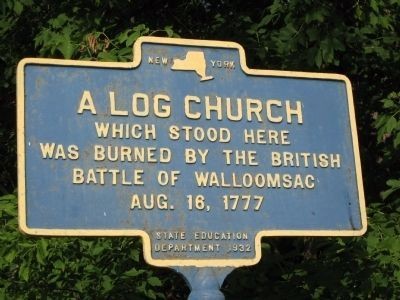
and built a new church. According to one account, the Log Church was sold
in 1790 by another account the log church was burned at the "Battle
of Bennington/Walloomsac". What remains of the original church
location is a historical marker and a couple of gravestones.)
Before 1772, Charles and his wife and three sons moved
from Hopkinton,
Rhode Island to the Valley of the Little White Creek and the Walloonsac River
located in what is now White Creek Township, Washington Co., N.Y. A
Royal Proclamation, by the King of England, in October, 1763 offered
generous terms and encouraged expansion, which may have played a part in
their migration, or raids by British troops on farms in this area of Rhode
Island may have been their incentive to move. Since they
were Baptist Church Members, they may have moved with a group of Baptists from
R.I. who arrived at about the same time and set up a church in this area organized
by Rev. William Waite. The church split in August of 1777, when
during the Battle of Bennington some of the members supported the British and
others fought with the colonials. Charles and his family were not
mentioned in the list of people that were involved in the restarting of the
church in 1779. However, church records at Waites Corners
show Charles Deake, Charles Jr. and Margaret Deake as members in 1784. (Rev. William Waite built a log church in
1772 at what
is now the intersection of County Route 68 and North Hoosick Rd. (Barkers Corners.
About 1788, they moved a few miles west to Waite's Corners "center White Creek"
and built a new church. According to one account, the Log Church was sold
in 1790 by another account the log church was burned at the "Battle
of Bennington/Walloomsac". What remains of the original church
location is a historical marker and a couple of gravestones.)
From the proceedings of Washington Union Baptist Association, held
at Waites Corners, June 1868: "Some of the church members went over to the
enemy the night before the battle and were obliged to fight in the conflict of
Aug. 16, 1777, against their own brethren and neighbors which threw the church
into confusion and entirely broke it up. But the next year Elder Waite collected
three members besides himself and began anew."
Map of White Creek, Washington Co., NY.
With the outbreak of the Revolutionary War, Charles joined the New York Militia,
District of Cambridge, County of Albany. (at this time the area was part of
Cambridge, Albany Co., N.Y. but currently is part of White Creek, Washington
Co., N.Y. The Indian name for the White Creek stream was San Coick) Military
records show that he served in Capt. William Brown's Class, Col. John Blair's
and Col. Van Woert's Regiments of the New York Militia. (The sixteenth Regiment)
The Deakes' lived on a farm adjoining Elder Waites' farm. Elder Waite was the
Minister of the White Creek Baptist Church. Their farms were located just north
of the Von Schoicks' Mill, located on the western bank of the White Creek where
it enters into the Walloonsac River, and on the road between the Village of
White Creek and San Coick (now North Hoosick). It was this Mill that Col. Baum
of the British Forces used for his headquarters immediately before The Battle
of Bennington. It was also down this road that Col. John Williams' Regiment
marched from White Creek to North Hoosick and there met and joined another regiment
from Bennington, Vt. commanded by Col. Warner and defeated the detachment of
British troops sent out to reinforce Col. Baums' Detachment. The following was
documented by Sally Dake Gardner on Feb. 1896. "My father's father name was
Charles Dake and he was the great-great grandfather of the afore-said applicant.
(Carrie O. Dake - D.A.R. Applicant). This Charles Deake, my grandfather, was
a Minuteman and fought for American independence under General Stark at The
Battle of Bennington, Vermont, on August 16, 1777. He died November 11, 1803,
aged sixty four years, six months and twenty days, before I was born. He was
survived by his widow Anna Deake, whom I well remember, and from whom I heard
and learned the particulars of her husbands participation in The Battle of Bennington.
She related them to me when I was a girl. According to her statement at the
time of said battle, they resided in the vicinity of Bennington, and on the
morning of the day of the battle, my grandfather being with Gen. Starks' Command,
she my said grandmother sent their two boys, my father, then fourteen years
old, and his older brother William Deake, then about sixteen years old, to a
mill with a grist of corn to be ground and as they were returning from the mill,
the battle began in their immediate vicinity. When the battle commenced my Uncle
William was frightened and began to cry, but my father swung his hat and cheered.
From the history of North
Hoosick: " In the 1700s a wooden bridge crossed the White Creek,
then known by its Indian name SanCoick. The most recent bridge at this A Mr. Van
Schaick (referred to as Tory Van Schaick) owned a grist mill powered by the waters
of White Creek, at the time of the revolutionary war. The mill was caught up in
a skirmish August 14,1777 between a British force led by Colonel Baum and a detachment
from the American Army under the command of Colonel Gregg. The British seized
the contents of the grist mill and the Americans destroyed the bridge causing
Colonel Baum to send for help. The mill that Mr. Van Schaick owned became known
as the "Old Grist Mill". During the 1800s it was sold several times.
The mill fell into disrepair and had to be rebuilt. John H. Burk, whose father
rebuilt the mill, was the last owner. He said that he had all the work he could
do supplying feed for the local people. Feed for animals and flour for home use
was made from crops of wheat, oats and buckwheat. Common grains grown on the surrounding
farms. The Grist Mill burned and was not rebuilt. Along with the grist mill was
a sawmill and cider mill, their owners and exact locations have not been recorded.
Some of these mills operated into the early 1900s."
After the battle my grandmother
went to search for my grandfather and found him in a church in Bennington which
was then in use as a hospital. (The church was the old Congregational Church
which was a wood building that was replaced in 1804-1806. There is a cemetery
next the church which contains the remains of 13 patriots and Hessions who died
in the Church/Meeting House as a result of wounds received during the battle).
(Another record indicates the church she referred to was the Waite's Meeting
House in White Creek and he was wounded with 600 other Hessian prisioners in
the small church.) He was not severely wounded but there were three bullet holes
through his clothing. She went to bring him some water and as she was carrying
it into the church a number of Hessians there begged for the water which she
provided to them. Some history books of the area quote her as being the first
Red Cross volunteer because of her tending to the wounded.
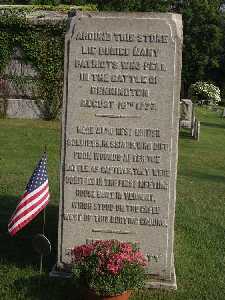
|
|
WHITE CREEK BATTLE
MARKER
|
On another occasion during
my grandfathers absence, while serving as a Minuteman, a squad of Tories came
and got their only cow out of the pasture, and were about to drive her away when
grandmother, who was a woman of dignified and noble appearance, went out and confronted
them and sternly commanded them to replace the animal in the pasture. The Tories
were so impressed by her fearless attitude that they obeyed her order and drove
the cow back into the pasture and slunk away. The foregoing statements and incidents
were related to me by my said grandmother when I was a girl. She died December
2, 1828, aged 87 years, 6 months and 18 days." Mrs. Gardner later stated "The
reason why the said William Gould Deake did begin to cry at the inception of the
said Battle of Bennington, and why the said Charles Deake Jr. began to shout were
that Charles was too young to fully realize the significance of what was then
being enacted, but that his brother William, who was older understood that their
father was engaged in the battle." Anna Gould because of her attending to the
wounded has been enrolled as a Patriot of The Revolutionary War and in New York
history books is listed as the first Red Cross Volunteer. Gen. Stark and the "Green
Mountain Boys" defeated the British at The Battle of Bennington. (Battle of Bennington:
2000 U.S. Troups involved with 30 killed and 40 wounded; 916 British Troups with
80 killed and 127 wounded). Pay records for Charles Deake Sr. were recorded as
follows: Two pounds, eight shillings and four pence (Certificate 25240) and one
pound, seven shillings and nine pence (Certificate 25364) both dated June 1, 1787.
Family tradition also indicates he was with General Washington at the surrender
of Cornwallis at Yorktown (but this is not proven).
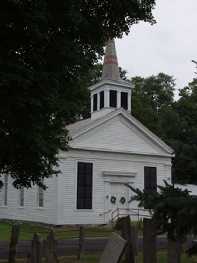
|
|
WHITE CREEK BAPTIST
CHURCH
|
(Information on Rev.
Waite and the White Creek Baptist Church: Rev. William Waite was born at
Wickford, N. Kingston, RI in Jan. 9,1730. He married Mary Nichols at West Greenwick, Kent
Co., RI on July 21,1751. William Waite died March 20, 1826, at the
age of 96. Rev. Waite and his wife Mary are buried
in the Baptist Church Cemetery in center White Creek (aka Waite's Corners).
The first church was a log church near White Creek, NY. The church
second church is just off Rt. 22 south of Cambridge, Washington Co., NY. The cemetery
is across the road from the Baptist Church and west of Post Corners.) The log
church he had built was burned by the British during the "Battle of Bennington"
(actually Walloomsac, 4 miles NE of Hoosick Falls in Rensselaer Co., NY, not
VT). The following historic marker is no longer there: A log church which stood
here was burned by the British Battle of Walloomsac, Aug. 16, 1777.
It was documented that in the spring of 1786, Charles Sr. his wife and three
sons (William Gould Deake, Charles Deake Jr., and Benjamin Deake) moved to the
Town of Ballstown, Saratoga Co., N.Y.; however, in the diary of Rev. Samson
Occom, a Mohegan Indian minister that Charles knew from Rhode Island, he visited
Charles and his family in the Ballston area on October 17, 1785 on his way to
Brothertown, NY (this is where Occom moved many of the Indian tribes from the
Westerly and Charlestown, RI area), so they probably moved there earlier than
indicated. Rev. Occom also mentioned in this book that Charles Deake was a Separate
Baptist. Their brother John stayed behind in Washington Co. until some time
between 1790 and 1800 and then also moved to Saratoga Co. Recorded in the Saratoga
Co. History: "Near the place was a fine large spring of deliciously cool and
sparkling water and here were found large quantities of bones of animals showing
that some past time it had been used as a camping ground by someone either Indians
or Tories probably during the Revolutionary War." On Mar. 7, 1787, Charles Dake
"Yeoman" of Albany Co. leased 100 acres of land for one year from Adrain Bancker
"Esquire" of Staten Island for five shillings. On Sept. 13, 1787, he purchased
the land from Adrain Bancker. The Deakes' were some of the earliest settlers
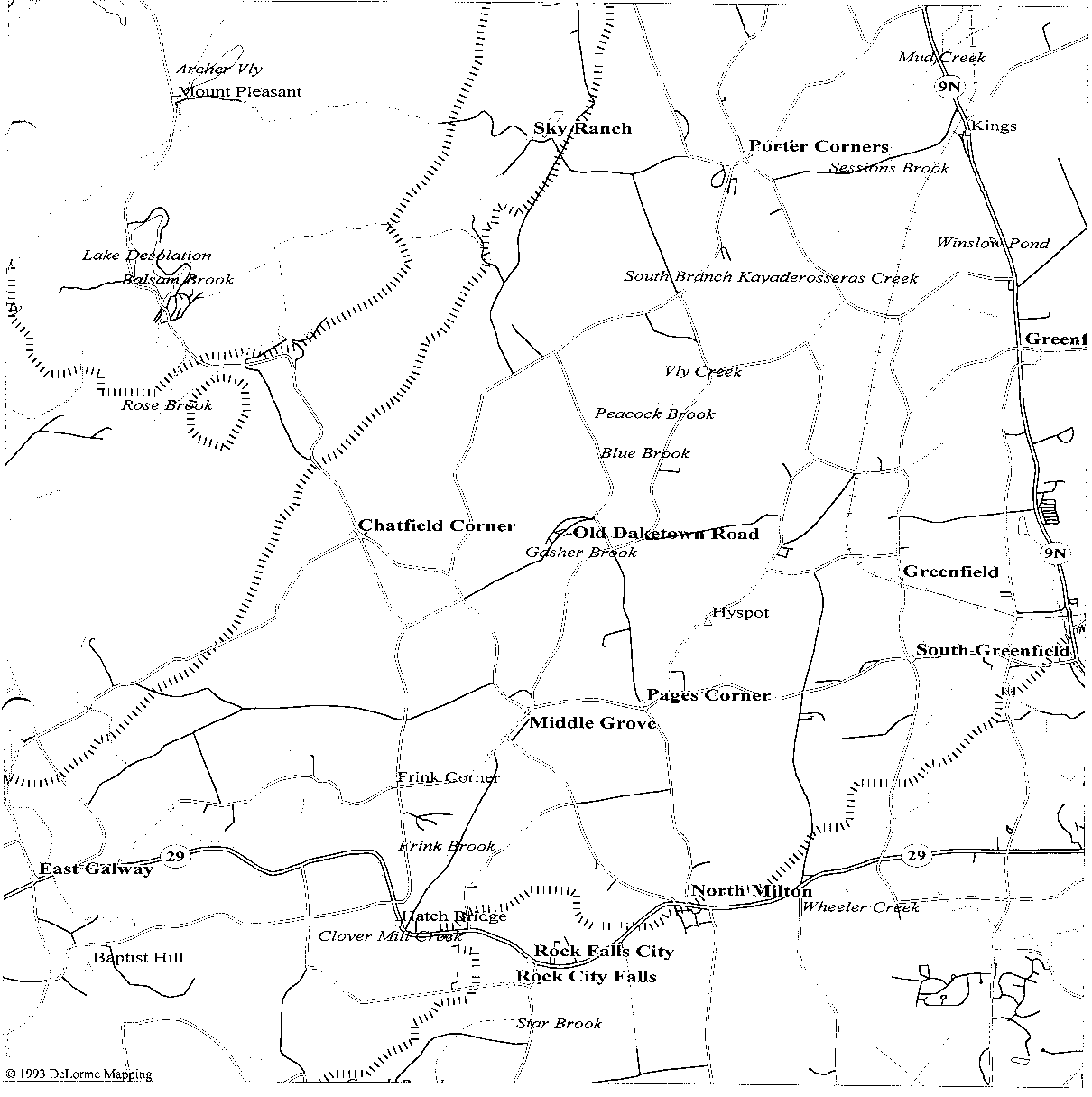
to this part of New York. This area, about a mile and a half northeast of Middle
Grove, N.Y., later became known as Daketown. Charles acquired 1500 acres of
land in Saratoga Co., N.Y. during his life time. On March 1794, Charles executed
a promissory note between Simeon Cosell and Ebenezear Allen for 9 pounds.
In 1794 the Second Baptist
church of Greenfield was formed at Daketown with Charles Deake Sr. listed as
the Church Deacon. (Charles Dake Jr. was also listed as the Deacon when the
church was disbanded in 1822. Reverand's. Abel Brown, John Lewis and Timothy
Day served this church in the capacity of pastor). To the inhabitants of the
vicinity this church was known as the Daketown church and was located about
a mile and half northwest of Middle Grove. It was constituted in 1794 and joined
the Shaftsbury Association in 1795. It dissolved its connection with that body
in 1808 and was finally broken up and disbanded in 1822.
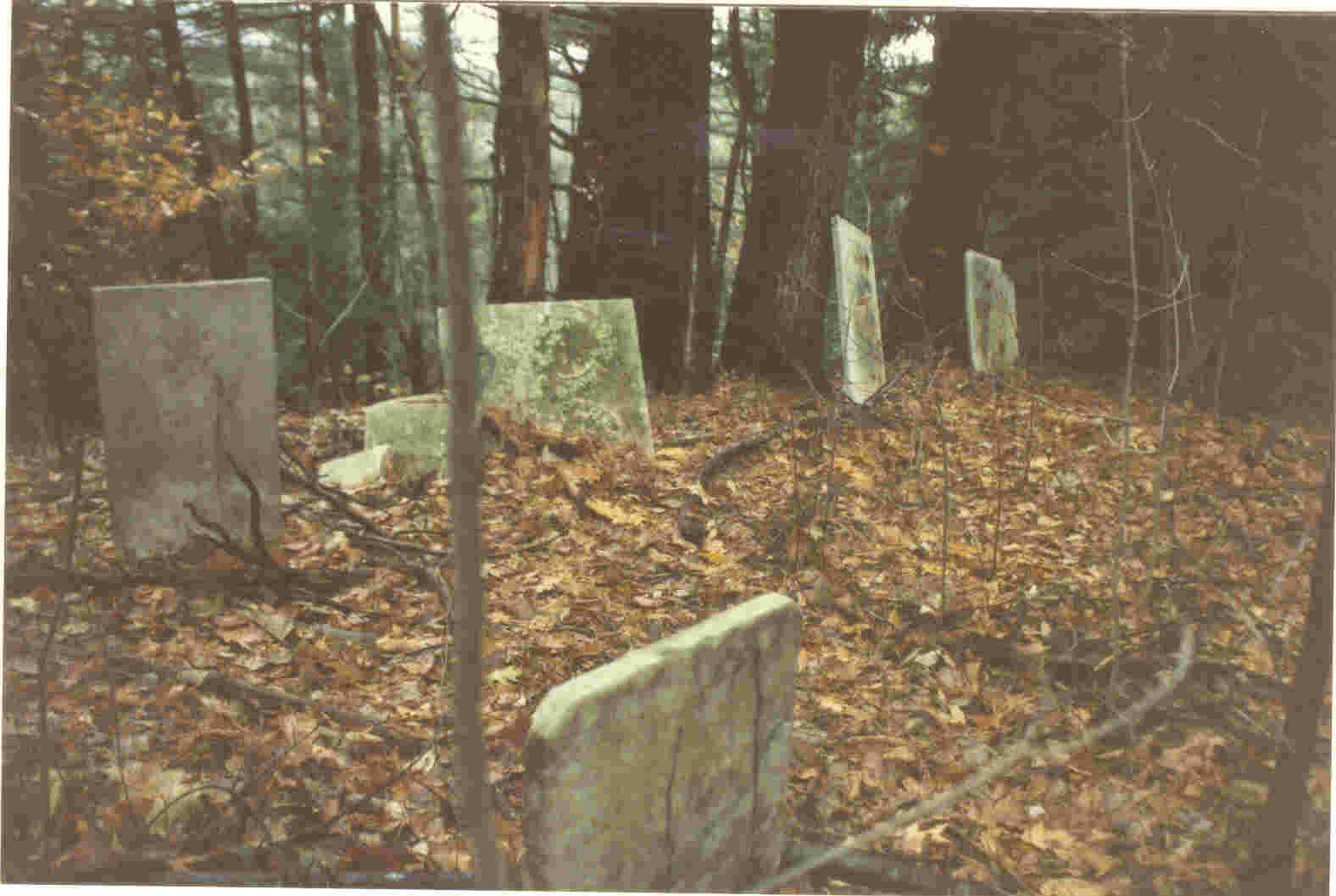
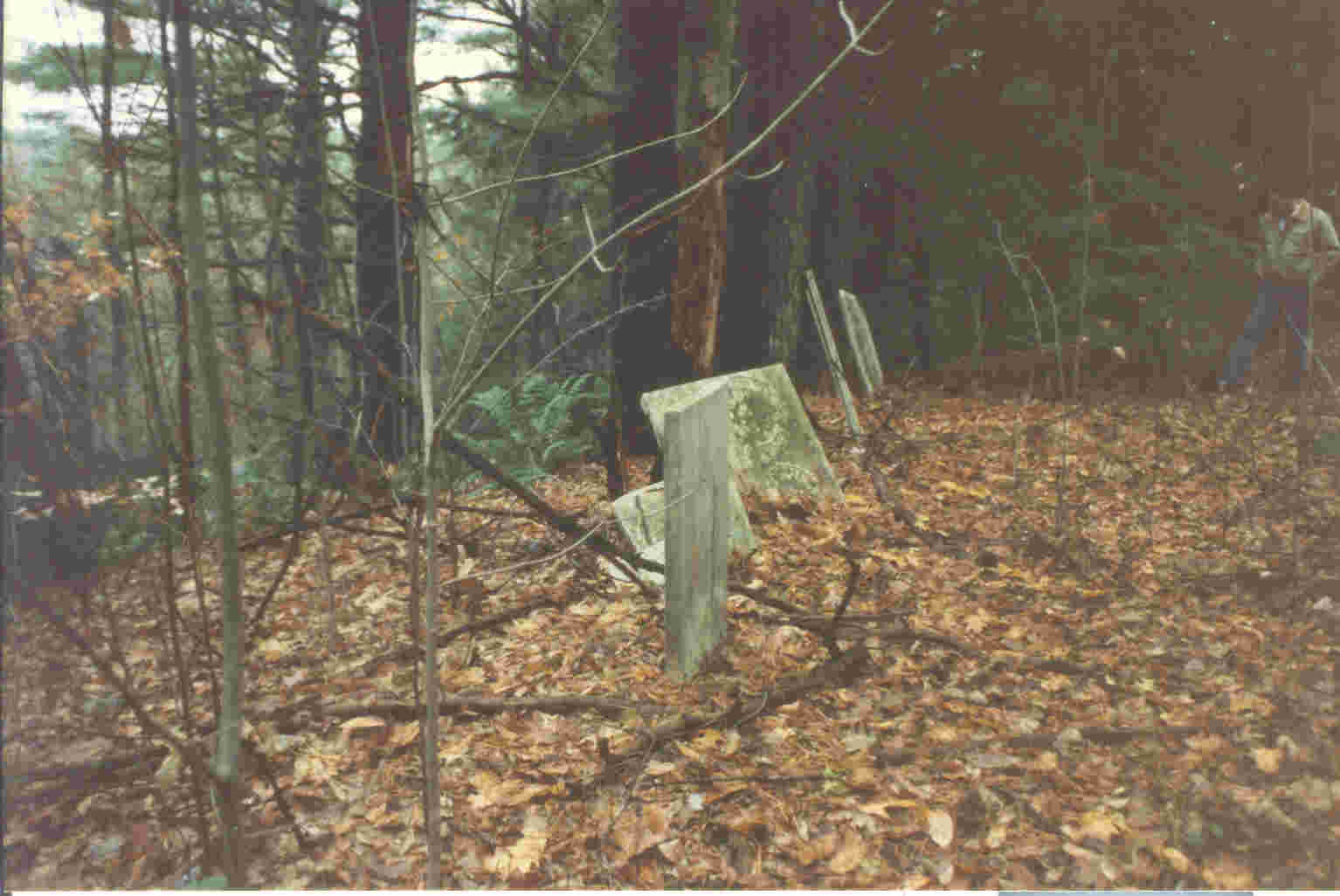
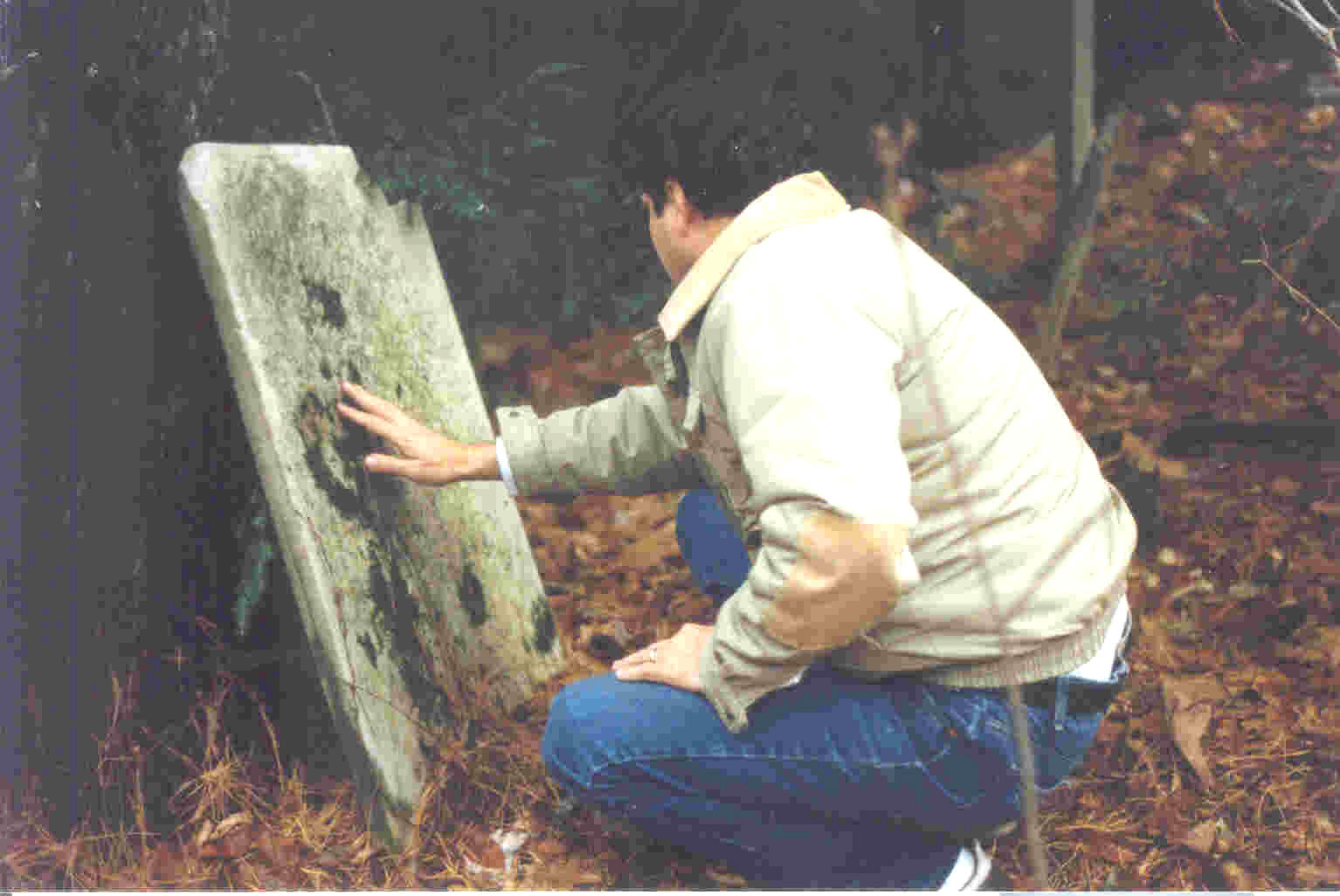
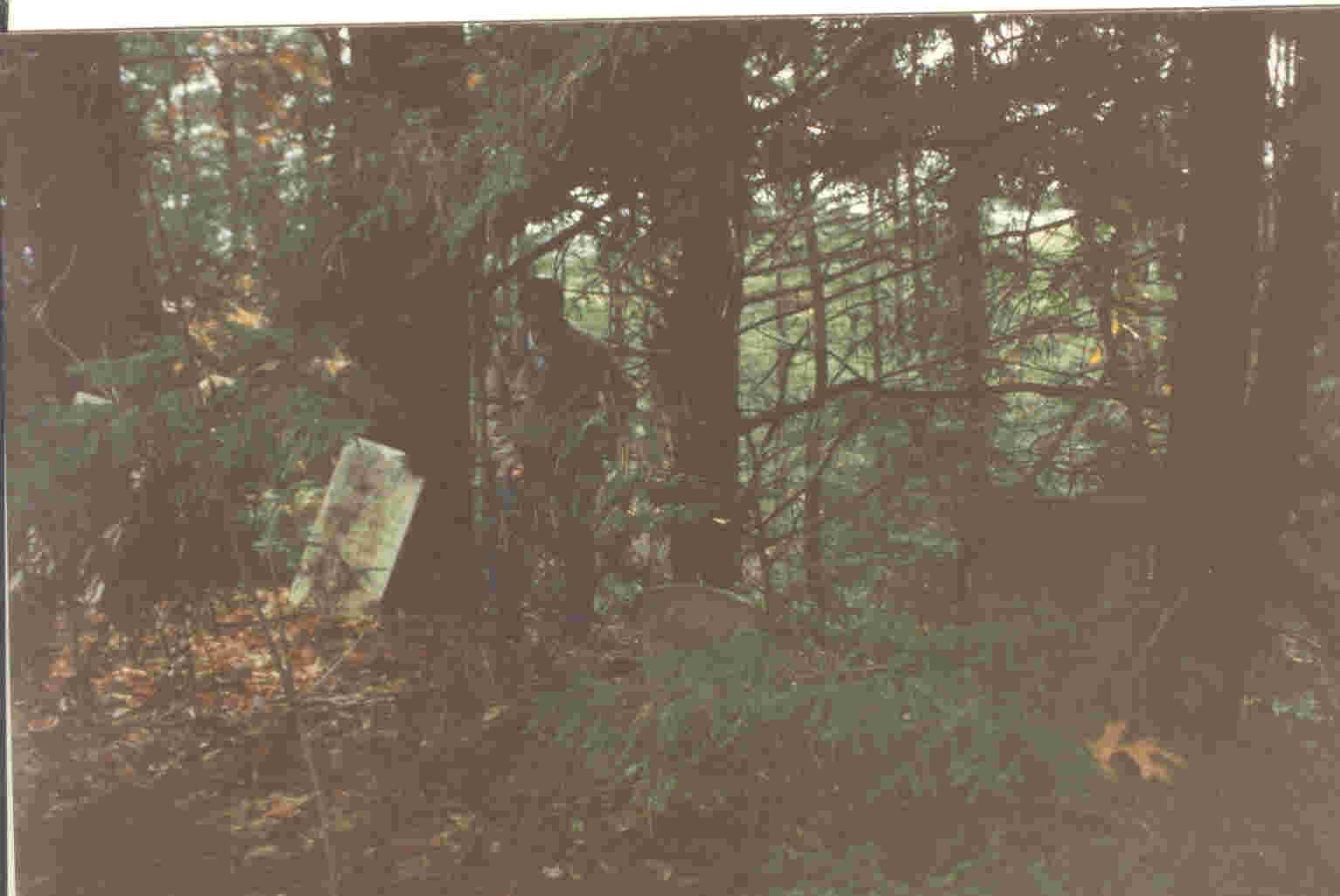
On Nov. 11, 1803 Charles died and was buried in the family cemetery at Daketown.
The Dake Cemetery is located near the southwest corner of the junction of the
Sand Hill Road and the Kayaderosseras Creek Road (County 19). It is about 250
feet beyond a cabin and over looks the creek road from an elevation of about
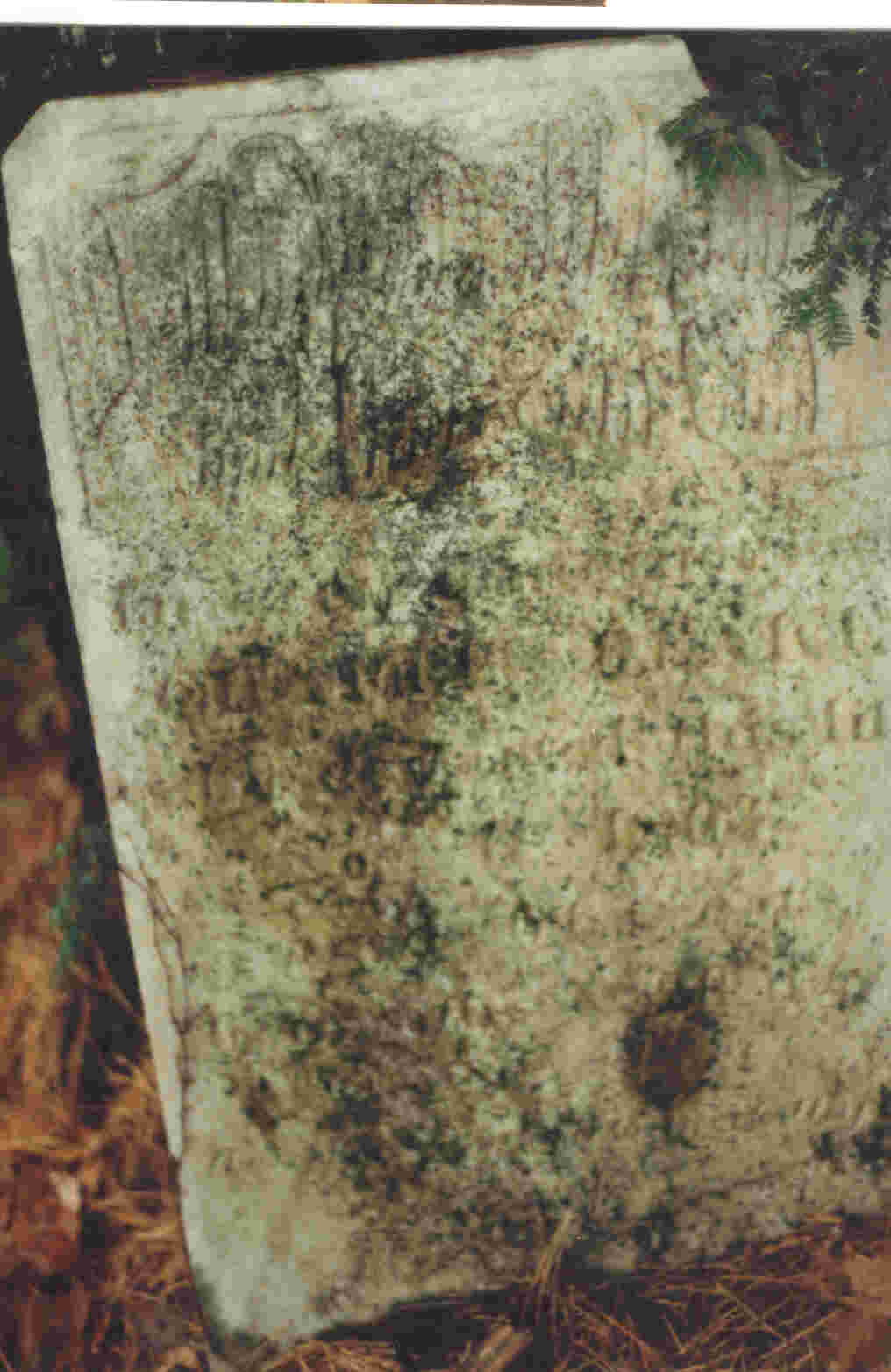
100 feet. Recorded on Charles' tombstone is the following inscription. "Charles
Deake who departed life Nov. 11, 1803 age 61 years 6 mo. 28 days. ""Reader prepare
to meet thy God" The cemetery is located about a half mile from the Charles
Deake Sr. home. (In 1811 the family formally changed their name to Dake).
Anna continued to live in this area until her death Dec. 2, 1828. She was buried
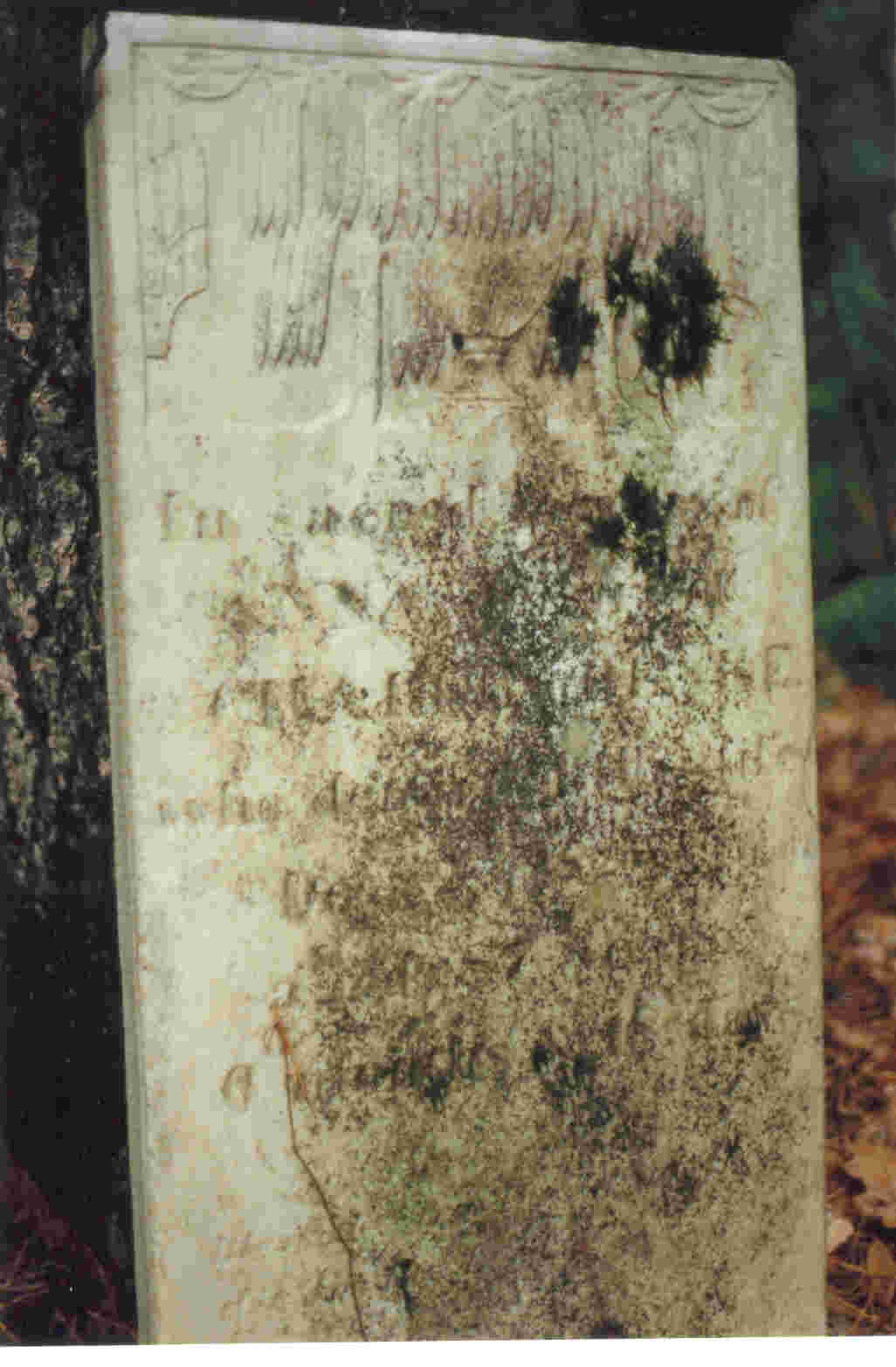
next to her husband in the Dake Cemetery. The inscription on her tombstone reads:
"In sacred memory of Anna, consort of Charles Deake, who departed this life
Dec. 2, 1828, aged 87 years, 6 months and 18 days. Blessed are the dead that
die in the Lord"
Map of Daketown, Greenfield center, Saratoga
Co., NY.
DAKETOWN
CEMETERY PICTURES
|
|
|
CHARLES DEAKE
TOMBSTONE
|
ANNA DEAKE TOMBSTONE
|
|
|
DAKETOWN
CEMETERY
|
|
|
|
|
OVER
GROWN CEMETERY
|
INSPECTING
CHARLES DEAKE TOMBSTONE
|
VIEW
AROUND CHARLES TOMBSTONE
|
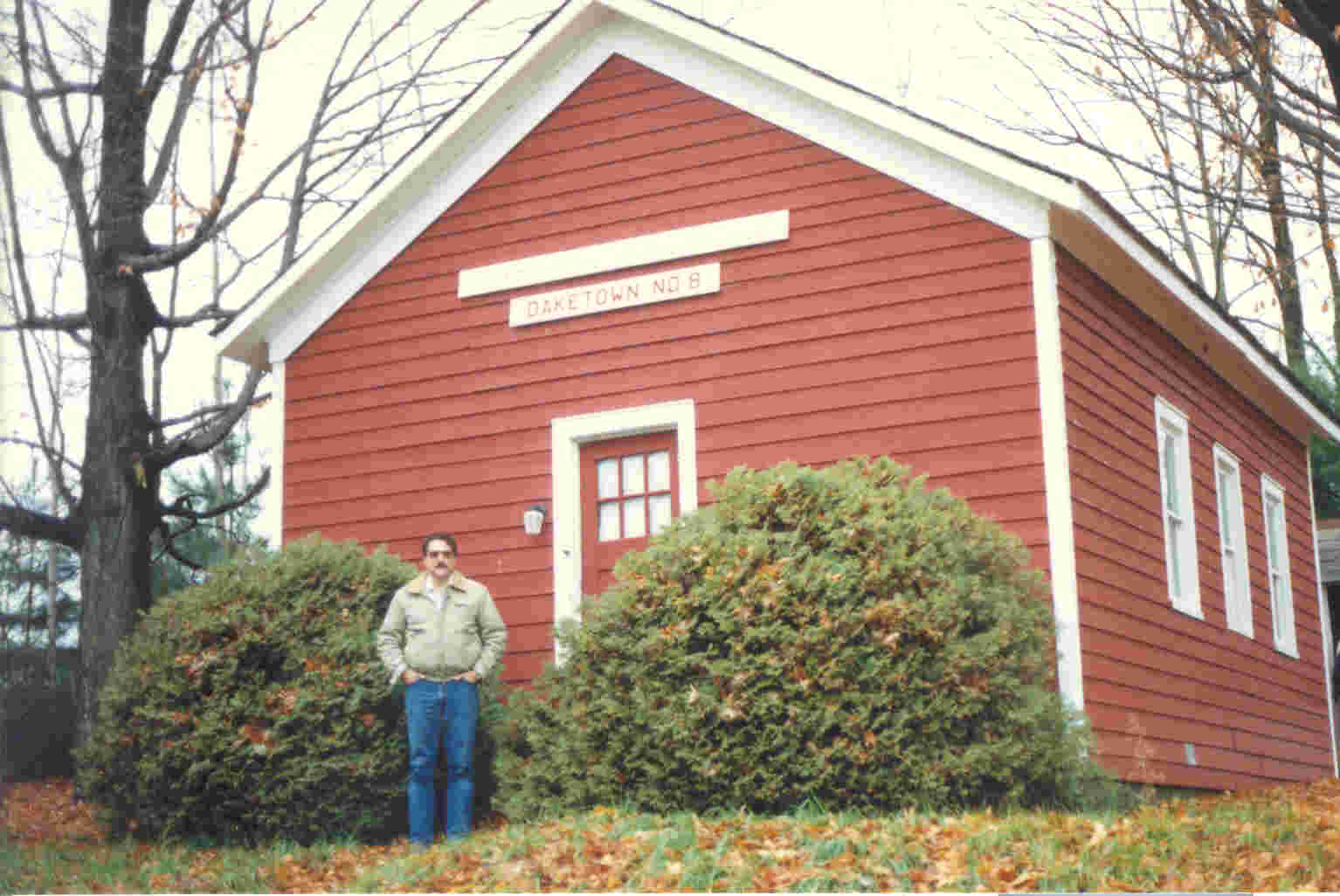
DAKETOWN
PICTURES
|
DAKETOWN RED
SCHOOL HOUSE
BUILT BY CHARLES
DEAKE, JR.
Closed June
1956 (Mary C. Steil last teacher)
|
CHARLES DEAKE FAMILY